
Diet-Resistant Sagging: Why Exercise Is Not Enough to Tighten Abdominal Skin?
Sagging in the abdominal area can persist even in people who have successfully completed a weight loss process. Although body fat is reduced through diet and exercise, a loose appearance that creates a sense of emptiness may remain, especially in the lower abdomen. This situation often brings the question: “Will it improve if I exercise more?”
Changes in the abdominal area are not limited only to fat tissue. Skin structure, connective tissue, and the muscular system should be evaluated together. Therefore, although exercise and nutrition improve body composition, they may not be able to reverse certain structural changes on their own. At this point, correctly understanding why sagging occurs makes the possible solutions clearer.
Why Does Abdominal Sagging Occur?
Sagging in the abdominal area usually occurs as a result of multiple factors coming together. The most common causes include rapid weight gain and loss, pregnancy, age-related loss of elasticity, and genetic predisposition.
During this process, the skin is forced to expand for a certain period of time. During weight gain or pregnancy, the abdominal skin stretches, and this stretching leads to structural changes in the collagen and elastin fibers beneath the skin. When weight is lost, fat tissue decreases, but the skin may not always return to its previous firmness.
Especially:
● People who experience rapid weight loss
● Those who have had multiple pregnancies
● Older age groups
may experience more noticeable sagging. This condition is related not only to the amount of fat but also to the mechanical properties of the skin.
Why Is Skin Elasticity So Important?
Skin elasticity refers to the skin’s ability to return to its previous form after being stretched. This characteristic largely depends on the health of collagen and elastin fibers. However, these fibers may be permanently damaged when stretched beyond a certain limit.
After prolonged stretching:
● Elastin fibers weaken
● Collagen structure becomes irregular
● Skin laxity develops
At this point, the skin partially loses its ability to “retract.” Exercise can strengthen muscle tissue, but it cannot directly repair these structural changes in the skin. For this reason, the degree of sagging is directly related not only to current weight but also to skin quality.
Exercise Burns Fat, But What Happens to the Skin?
Exercise helps reduce fat tissue by increasing energy expenditure. This provides an important advantage in terms of body contouring. However, the effects of exercise are mostly on muscle and fat tissue.
What exercise provides:
● Increase in muscle mass
● Decrease in fat percentage
● Increase in overall body firmness
However, these effects do not eliminate excess skin. On the contrary, as fat tissue decreases, the supporting volume beneath the skin also decreases, and existing sagging may become more noticeable. The “sense of emptiness” seen especially in the lower abdomen is often caused by excess skin. This condition may not disappear completely, no matter how much exercise is performed.
Why May the Appearance Not Change Even If the Abdominal Muscles Become Stronger?
Abdominal exercises especially aim to strengthen the rectus abdominis and oblique muscles. The development of these muscles may make the abdominal wall feel firmer. However, this development does not always create a visible change on the skin surface. The main reason for this is the structural difference between muscle tissue and skin. While muscles are located in a deeper plane, the sagging problem occurs in the superficial tissues.
The following situations are common:
● The skin may remain loose even though the muscles are strong
● The abdomen may become flatter, but excess skin may persist
● The form achieved through exercise may not be reflected by the skin
For this reason, while exercise improves muscle structure, it is not a method that eliminates excess skin.
Why Does Sagging Become More Noticeable After Dieting?
During the weight loss process, the volume of fat cells decreases. However, the skin cannot always adapt to this change at the same speed. Especially in cases of rapid weight loss, noticeable skin laxity may develop.
The main reasons for this include:
● The limited adaptation time of the skin
● Decrease in collagen production with age
● Permanent effects of prolonged stretching
This situation is often described as “I became slimmer, but my skin did not tighten.” In fact, the problem here is not fat, but excess skin. Therefore, after the weight loss process is completed, the body contour should be re-evaluated.
At What Point Does Surgery Become Relevant for Skin Sagging?
In cases where skin laxity is mild, lifestyle changes and some supportive treatments may provide limited benefits. However, in advanced sagging, these methods may not be sufficient.
Surgical evaluation generally becomes relevant in the following situations:
● If there is noticeable excess skin
● If sagging is visible even under clothing
● If hygiene and comfort problems occur
● If muscle separation (diastasis recti) is present
In such cases, procedures such as tummy tuck (abdominoplasty) involve removing excess skin and reshaping the abdominal wall. The aim is not only to achieve an aesthetic appearance but also to obtain a more functional abdominal structure.
What Do Energy-Based Technologies Provide in This Process?
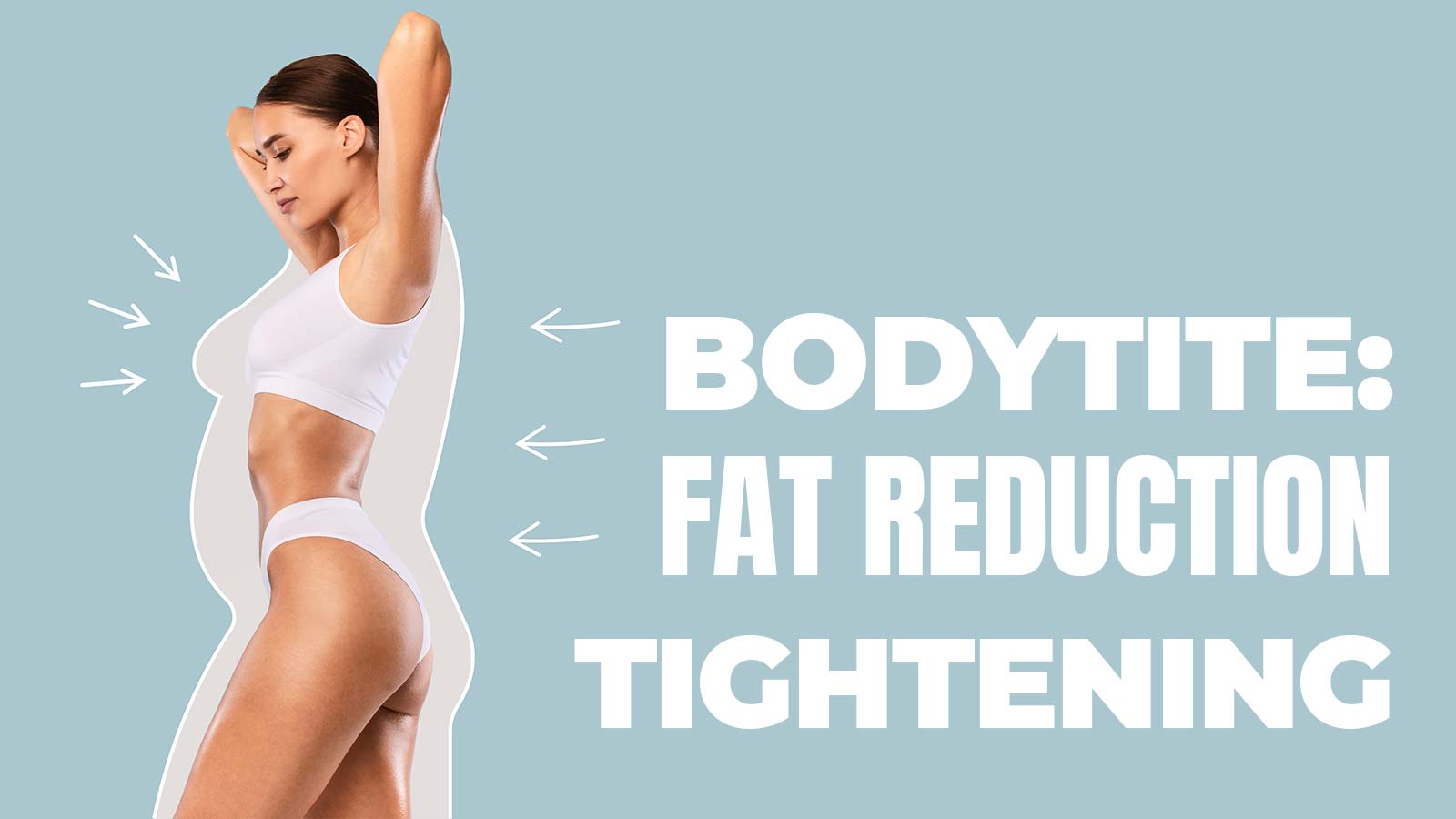
Energy-based technologies such as Quantum RF, used for skin tightening, may support collagen production in the subcutaneous tissues by creating a controlled heat effect. In this process, shortening of existing collagen fibers, stimulation of new collagen formation, and gradual improvement in tissue quality are targeted. Especially in patients with mild to moderate skin laxity, these methods may contribute to the skin appearing firmer and more tightened. At the same time, after volume-reducing procedures such as liposuction, they may also be included in the plan to support the skin’s adaptation to the new contour.
These technologies play a complementary role in the right patient rather than being an alternative to surgical procedures. In cases where skin elasticity is borderline, they may help the contour form in a more balanced way. However, their effects do not appear suddenly with a single application; they are observed gradually over time, together with tissue healing.
However:
• They are not sufficient on their own in advanced sagging
• They do not eliminate excess skin
• Their effect becomes noticeable gradually over time
For this reason, energy-based technologies offer more meaningful results when expectations are addressed realistically and the right patient group is selected.
A More Realistic Approach
Sagging in the abdominal area cannot be explained only by excess fat. Skin structure, connective tissue, and the muscular system should be evaluated together. Exercise and diet are fundamental elements in creating a healthy body composition; however, they are not always enough to eliminate excess skin.
Therefore, the answer to the question “Why is it not tightening?” often lies in the biological limits of the skin. Understanding these limits allows expectations to be evaluated within a more balanced framework.
Each individual’s body structure and healing capacity are different. Therefore, the solution approach should also be determined individually. The body contouring process should be considered not only as losing weight, but also together with understanding how the tissues respond to this change.
Physician Information
Assoc. Prof. Dr. Sedat Tatar is a Plastic, Reconstructive, and Aesthetic Surgery specialist who is Double Board Certified by two international boards. He holds the titles of Fellow of the American College of Surgeons (FACS) and Fellow of the European Board of Plastic, Reconstructive and Aesthetic Surgery (FEBOPRAS).
His international professional memberships include ISAPS (International Society of Aesthetic Plastic Surgery) and ASPS (American Society of Plastic Surgeons).
His clinic is located in Istanbul and is officially authorized by the Turkish Ministry of Health as a Health Tourism Center. His company is registered in the United Kingdom & Wales.
CONTACT INFORMATION
Telephone No : +90 (555) 100 10 83
Contact Link : [email protected]
Address : Levent District, Karanfil Araligi Street No: 18 Besiktas/ISTANBUL