
Body Contouring in Patients With Poor Skin Quality: How Is a Skin-Tightening Strategy Built?
In body-contouring procedures, removing fat or adjusting volume alone is not sufficient. For results to appear aesthetic, smooth, and long-lasting, the skin must be able to adapt to the body’s new form. However, in some patients, skin elasticity is weak, tissues are lax, and the capacity for retraction is limited. In such cases, liposuction alone often fails to achieve the desired level of tightening, and looseness, surface irregularities, or a deflated appearance may occur.
For this reason, body-contouring strategies in patients with poor skin quality must go beyond fat reduction and be planned with a more comprehensive approach that considers skin biology, elasticity potential, and tightening capacity. In this article, we examine—through a clinical perspective—which parameters are evaluated in patients with low skin quality, when surgical options are preferred versus supportive technologies, and how an effective tightening strategy is established.
What Does Skin Quality Mean, and Why Is It So Important?
Skin quality is not limited to external appearance; it refers to the structure of elastic fibers, skin thickness, connective tissue strength, and the ability of the skin to retract. Even after fat removal, the skin must have sufficient elasticity to conform to the new contour. Otherwise, slimming may occur, but the skin may not tighten to the desired degree.
Key factors that affect skin quality include:
● A gradual decrease in elastin and collagen with age
● Smoking and lifestyle habits
● Rapid and significant weight loss
● Tissue laxity after pregnancy
● Genetic connective tissue characteristics
● Sun damage and skin thinning
For this reason, body-contouring plans cannot be the same for every patient. In individuals with poor skin quality, the strategy must be more cautious and multidimensional.
Why Might Liposuction Alone Be Insufficient in Patients With Poor Skin Quality?
Liposuction reduces fat tissue, but it does not provide a direct mechanism to tighten the skin. If skin elasticity is good, the skin can naturally retract. However, when elasticity is weak:
● The skin may remain loose
● Surface waviness or irregularity may develop
● Slimming occurs without achieving a firm contour
● A “deflated skin” appearance may be seen
This does not indicate a failed procedure; it reflects the biological limits of the skin. Therefore, planning must consider skin retraction capacity as carefully as fat removal.
Key Assessments That Define the Strategy
In patients with poor skin quality, the treatment strategy is individualized. During planning, the following questions are addressed:
● Is skin laxity mild or pronounced?
● Is excess fat the main issue, or is there significant skin redundancy?
● Is the laxity localized or widespread?
● What is the patient’s age and weight history?
● Is the laxity related to pregnancy or weight loss?
● How dramatic a change does the patient expect?
This analysis determines which approach will provide the most appropriate outcome.
Mild to Moderate Laxity: Energy-Based Skin-Tightening Systems
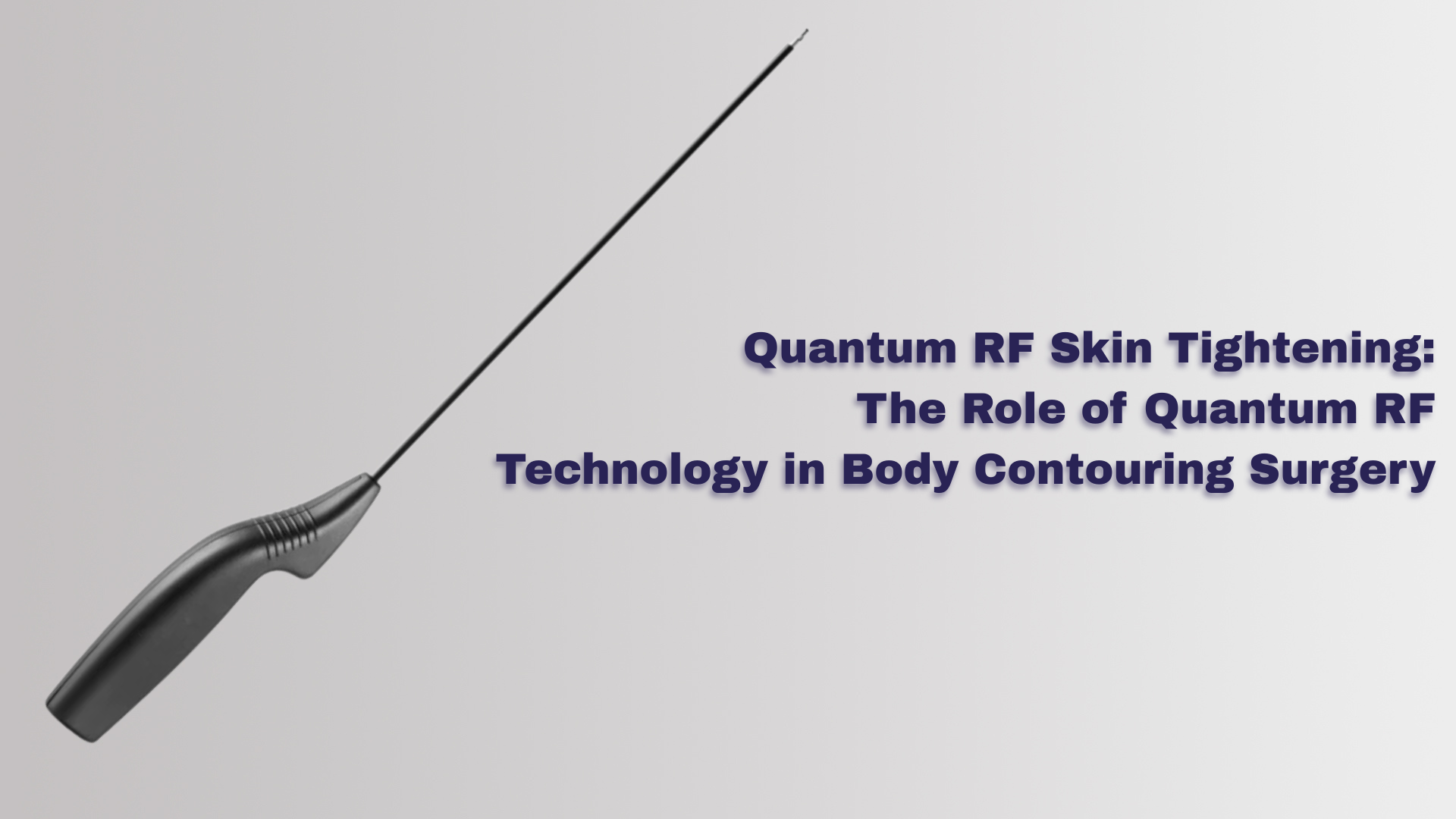
When skin laxity is not severe but elasticity is weak, supportive technologies may be used without resorting to surgery. At this stage, radiofrequency-based systems such as Quantum RF increase collagen production by heating the deeper tissues from within, leading to skin tightening.
This approach is particularly effective in:
● Patients who need additional support after liposuction
● Individuals with thin skin and weak elastic structure
● Laxity of the arms, abdomen, inner thighs, and lateral waist
● Mild sagging cases that do not yet require surgical intervention
These systems promote tightening without cutting the skin or removing tissue, resulting in a more defined contour.
Significant Skin Sagging: Surgical Lifting Options
When excess skin is clearly present, elasticity is markedly reduced, and true sagging exists, surgical lifting procedures are the most effective solution. In some cases, the skin no longer has the capacity to retract, making tissue removal necessary.
In such situations, the following may be considered:
● Abdominal area → abdominoplasty
● Upper arms → arm lift
● Inner thighs → thigh lift
● Post-pregnancy or widespread changes → combined lifting and contouring procedures
These surgeries do more than improve appearance; they provide a more accurate, functional, and long-lasting result when skin quality does not allow non-surgical tightening.
A Crucial Principle: The Right Patient, the Right Method
The primary goal in patients with poor skin quality is not to apply the same solution to everyone, but to identify the safest, most respectful, and most effective approach for the individual’s tissue characteristics. For some patients, liposuction combined with RF technology is sufficient; for others, surgical lifting offers a far more appropriate and durable solution. Therefore, evaluation must always be individualized.
Why Are Realistic Expectations Essential in Patients With Poor Skin Quality?
In this patient group, proper education and realistic expectation management are essential parts of treatment. The biological limits of the skin define the natural boundaries of achievable results. Understanding that:
● the process may take time,
● supportive treatments may be required,
● and in some cases surgery is the most appropriate option
helps ensure a healthier psychological and aesthetic journey.
A Firmer, More Controlled, and Healthier Contour
When properly planned, body contouring in patients with poor skin quality can yield highly successful outcomes. The key is evaluating not only fat, but also skin, tissue quality, elasticity, and healing capacity together. This integrated approach leads to a firmer, more controlled, and aesthetically balanced body silhouette.
Physician Information
Assoc. Prof. Dr. Sedat Tatar is a Plastic, Reconstructive, and Aesthetic Surgery specialist who is Double Board Certified by two international boards. He holds the titles of Fellow of the American College of Surgeons (FACS) and Fellow of the European Board of Plastic, Reconstructive and Aesthetic Surgery (FEBOPRAS).
His international professional memberships include ISAPS (International Society of Aesthetic Plastic Surgery) and ASPS (American Society of Plastic Surgeons).
His clinic is located in Istanbul and is officially authorized by the Turkish Ministry of Health as a Health Tourism Center. His company is registered in the United Kingdom & Wales.
CONTACT INFORMATION
Telephone No : +90 (555) 100 10 83
Contact Link : [email protected]
Address : Levent District, Karanfil Araligi Street No: 18 Besiktas/ISTANBUL