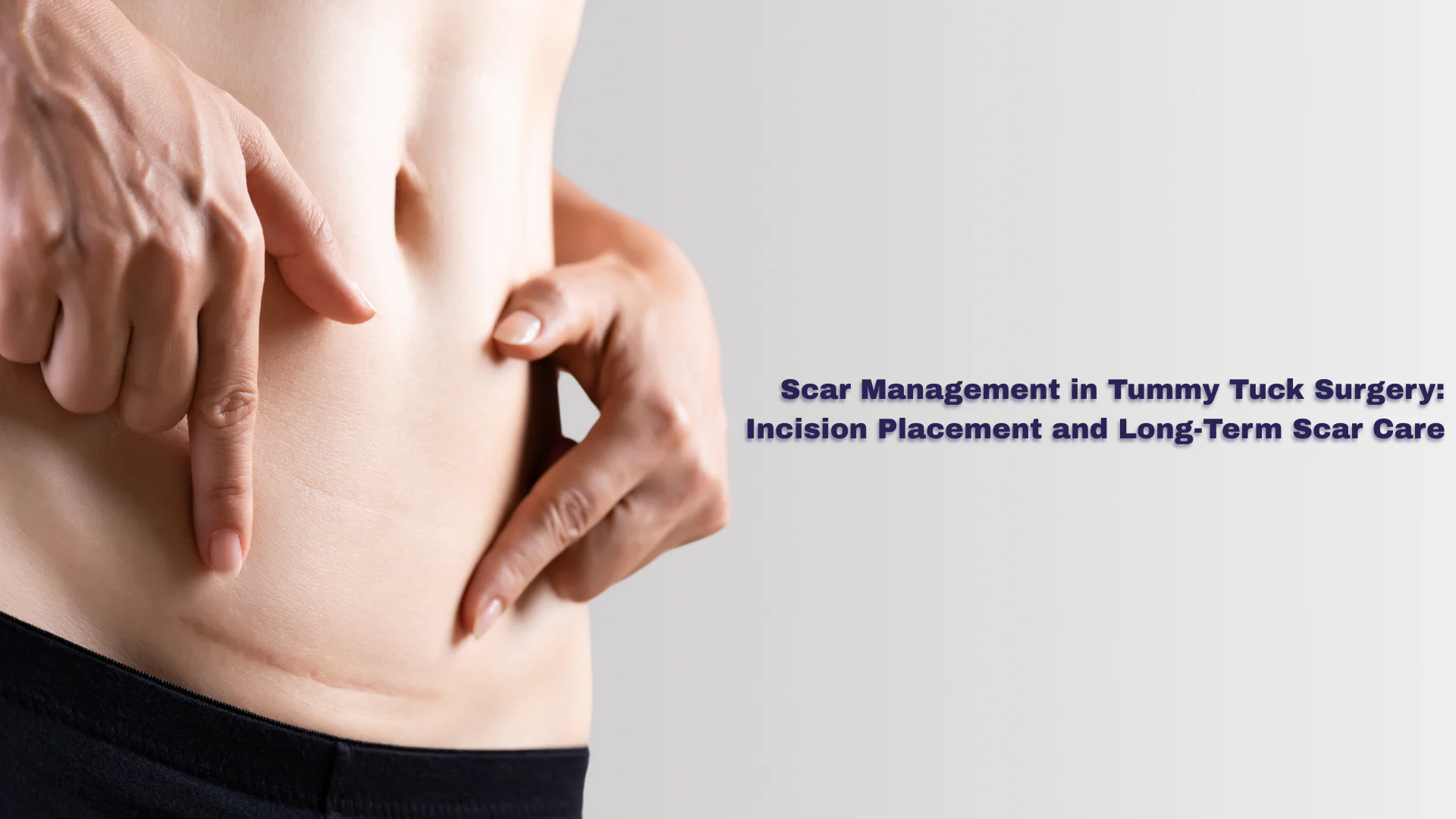
Scar Management in Tummy Tuck Surgery: Incision Placement and Long-Term Scar Care
A tummy tuck (abdominoplasty) is an effective body contouring procedure, particularly for conditions such as post-pregnancy abdominal laxity, excess skin after significant weight loss, and muscle separation (diastasis recti). However, one of the most common concerns for patients is: “What will the surgical scar look like?”
In tummy tuck surgery, the incision is created in a planned and controlled manner. The scar does not disappear completely, but with proper surgical technique, appropriate placement, and long-term care, its visibility can be significantly reduced. Scar management is not limited to the operation itself; it continues throughout the months following surgery.
Where Is the Incision Placed?
In tummy tuck surgery, the incision is usually placed in the lower abdomen, positioned so that it remains within the underwear or bikini line. The goal is to minimize the visibility of the scar in everyday life.
The length of the incision depends on the extent of the procedure. A mini tummy tuck may require a shorter incision, while a full tummy tuck or circumferential body contouring procedure may involve a longer incision.
When planning the incision, several factors are considered:
● The amount of excess skin
● The position of the belly button
● Any previous surgical scars
The surgeon’s goal is not only to remove excess skin but also to position the incision along a line that heals as aesthetically as possible. For this reason, incision design is one of the most critical steps of the operation.
How Does a Surgical Scar Heal?
After surgery, wound healing generally progresses through three stages: inflammation, proliferation, and remodeling. In the first weeks, the incision line may appear pink or red. This is a normal part of the active healing process.
Over time, the color gradually fades and the scar becomes thinner and less noticeable.
Several factors influence the final appearance of a scar:
● Skin type and genetic predisposition
● Smoking
● Development of infection
● Sun exposure
● Weight fluctuations
Some individuals naturally form more visible scars, while others heal with a very fine line. Much of this variation is related to each person’s biological healing capacity.
Early Postoperative Care
During the first weeks after a tummy tuck, protecting the incision line is extremely important. During this period, patients should:
● Follow wound care instructions carefully
● Keep the incision area clean and dry
● Avoid sudden movements that place tension on the incision
● Wear recommended compression garments consistently
Compression garments are not used only for swelling control. They also help reduce mechanical tension on the incision line. Wounds that experience less tension generally heal with finer scars.
Long-Term Scar Care
Scar maturation is a gradual process that may take several months. Typically, within 6–12 months, the scar becomes lighter in color and softer in texture. During this period, ongoing scar care is recommended.
Long-term scar care may include:
● Silicone-based gels or sheets
● Sun protection (high SPF)
● Gentle scar massage
● Laser treatments or supportive therapies when recommended by a physician
Sun exposure in the early stages may cause scars to darken. For this reason, protecting the area from sunlight—especially during the first year—is particularly important.
Do the Scars Disappear Completely?
The scar created during tummy tuck surgery does not disappear completely. However, with proper surgical technique and consistent care, it can gradually become a thin, pale line that is difficult to notice over time.
It is important to maintain realistic expectations. The scar is a natural part of the procedure, but for most patients it is far more acceptable than the previous appearance of loose or sagging abdominal skin.
Patience and Follow-Up in Scar Management
Scar maturation requires time. A scar that appears more noticeable during the first months typically becomes softer and lighter after about six months. During this process, regular follow-up visits allow the surgeon to monitor healing and recommend supportive treatments when necessary.
Scar management is an important component of the overall aesthetic outcome. For this reason, postoperative care is just as important as the incision planning during surgery.
For a More Balanced Recovery
Scars are unavoidable after tummy tuck surgery, but their visibility can be minimized with proper planning and long-term care. The position of the incision, surgical technique, individual healing capacity, and patient compliance with postoperative care all influence the final appearance.
Scar management is a gradual process that requires patience. With regular follow-up and appropriate care, the scar typically softens and becomes more aesthetically subtle over time.
Physician Information
Assoc. Prof. Dr. Sedat Tatar is a Plastic, Reconstructive, and Aesthetic Surgery specialist who is Double Board Certified by two international boards. He holds the titles of Fellow of the American College of Surgeons (FACS) and Fellow of the European Board of Plastic, Reconstructive and Aesthetic Surgery (FEBOPRAS).
His international professional memberships include ISAPS (International Society of Aesthetic Plastic Surgery) and ASPS (American Society of Plastic Surgeons).
His clinic is located in Istanbul and is officially authorized by the Turkish Ministry of Health as a Health Tourism Center. His company is registered in the United Kingdom & Wales.
CONTACT INFORMATION
Telephone No : +90 (555) 100 10 83
Contact Link : [email protected]
Address : Levent District, Karanfil Araligi Street No: 18 Besiktas/ISTANBUL