
Why Doesn’t the Skin Always Tighten After Liposuction? When Does Quantum RF Come Into Play?
Liposuction is an effective surgical method for reducing localized fat and reshaping body contours. However, removing fat alone is not always sufficient for every patient. While some individuals experience good skin retraction after liposuction, others may notice looseness, surface irregularities, or mild sagging. This situation is usually not due to unsuccessful fat removal, but rather to factors such as skin structure, age, elasticity, and individual tissue biology.
For this reason, the modern aesthetic approach considers liposuction not merely as a fat-removal procedure, but as a broader body-contouring process that also includes skin quality and tightening. This is where skin-tightening technologies such as Quantum RF become important supportive tools alongside liposuction.
In this article, we examine—through a clinical perspective—why the skin does not always retract at the same level after liposuction, when supportive treatments are needed, and how Quantum RF contributes to this process.
Why Doesn’t the Skin Always Retract the Same Way After Liposuction?
Liposuction reduces fat tissue, but the skin’s ability to tighten and adapt to its new shape depends entirely on skin elasticity and connective tissue quality. Each patient’s skin biology is different, which is why results can vary significantly.
The main factors that may prevent adequate skin tightening include:
● A natural decline in elastic fiber strength with age
● Poor baseline skin elasticity
● A history of significant weight loss
● Long-standing and dense fat accumulation
● Tissue laxity after pregnancy
● Smoking and compromised tissue quality
● Genetic skin characteristics
For these reasons, in some patients liposuction alone may slim the contour, but additional support may be required to achieve the desired level of skin firmness.
Why Can a “Wavy Appearance” or Mild Sagging Occur?
Some patients may notice the following after liposuction:
● Mild surface irregularities
● A loose or less firm appearance
● A surface that is not perfectly smooth or homogeneous
This is usually related to:
● The formation of empty space after the reduction of subcutaneous fat
● The skin’s inability to immediately return to its previous tension
● The natural time required for tissue adaptation
In most patients, this appearance improves significantly over time. However, in certain cases, energy-based skin-tightening systems are introduced to accelerate the process and achieve a firmer result.
What Is Quantum RF?
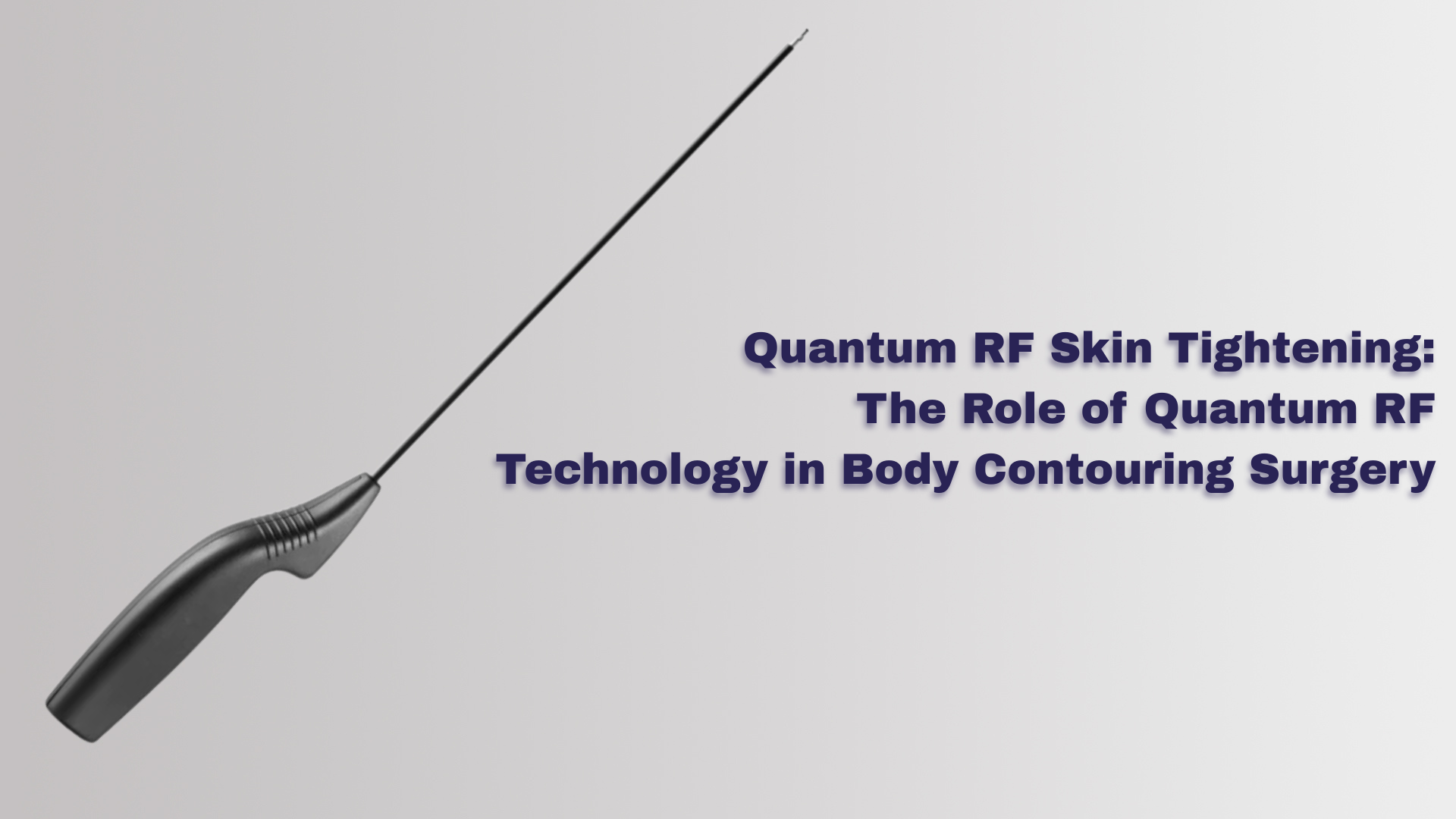
Quantum RF is a technology that increases collagen production and tightens the skin from within by delivering highly controlled radiofrequency energy to the underlying tissues—without cutting the skin or removing tissue. It is a non-surgical, medically based skin-tightening method.
The primary goals of Quantum RF are:
● Enhancing skin elasticity
● Supporting skin thickness
● Tightening loose tissues
● Refining contour definition after liposuction
For this reason, Quantum RF is a strong complementary option for patients whose skin quality does not improve sufficiently after liposuction.
When Does Quantum RF Come Into Play?
The most important principle when planning Quantum RF is respecting the body’s natural healing process.
The general clinical approach is as follows:
● During the first 3–4 weeks, swelling is still present and natural healing is observed
● After 4–6 weeks, skin elasticity and the degree of tightening can be evaluated more clearly
● If the skin is still found to be lax at this stage, Quantum RF treatment can be planned
In Which Areas Is Quantum RF Effective?
Quantum RF is particularly effective in areas treated with liposuction where skin laxity may develop. The most commonly treated areas include:
● Abdomen
● Waist and flanks
● Back
● Inner thighs
● Inner upper arms
Its ability to be used as a supportive treatment either during surgery or in the postoperative period is a significant advantage.
Can Quantum RF Replace Liposuction?
No. Quantum RF is not a fat-removal procedure. It does not reduce fat; it tightens the skin. Therefore, the two treatments are not alternatives, but often complementary:
● Excess fat → Liposuction
● Loose skin after fat removal → Quantum RF
This combination offers a more modern and effective body-contouring approach by addressing both volume and skin quality within the same framework.
Clearer Contours With the Right Patient Selection and Proper Timing
It is completely natural for skin tightening after liposuction to vary from person to person. What matters is evaluating the patient not only in terms of fat removal, but also skin quality, tissue biology, and the healing process. At this point, Quantum RF stands out as a powerful technology that provides additional support without requiring further surgical intervention.
Physician Information
Assoc. Prof. Dr. Sedat Tatar is a Plastic, Reconstructive, and Aesthetic Surgery specialist who is Double Board Certified by two international boards. He holds the titles of Fellow of the American College of Surgeons (FACS) and Fellow of the European Board of Plastic, Reconstructive and Aesthetic Surgery (FEBOPRAS).
His international professional memberships include ISAPS (International Society of Aesthetic Plastic Surgery) and ASPS (American Society of Plastic Surgeons).
His clinic is located in Istanbul and is officially authorized by the Turkish Ministry of Health as a Health Tourism Center. His company is registered in the United Kingdom & Wales.
CONTACT INFORMATION
Telephone No : +90 (555) 100 10 83
Contact Link : [email protected]
Address : Levent District, Karanfil Araligi Street No: 18 Besiktas/ISTANBUL